


Why Is Water Coming Up Through My Basement Floor?
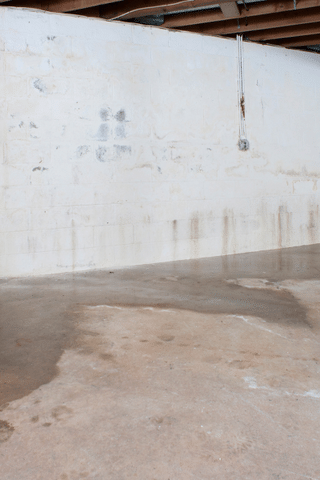 You walk downstairs after a heavy rainstorm and notice something you definitely didn't want to see: water on your basement floor.
Maybe it's a small damp spot. Maybe water is bubbling up through a crack in the concrete. Or perhaps you're seeing water around the edges of the floor where it meets the foundation walls.
Whatever the situation, one question usually comes to mind:
Why is water coming up through my basement floor?
The good news is that you're not necessarily dealing with a major foundation failure. Water coming through a basement floor is a common problem, and there are several possible causes. The important part is figuring out where the water is coming from and addressing the source before repeated moisture leads to bigger problems.
1. Hydrostatic Pressure Is Pushing Water Up
One of the most common reasons water comes through a basement floor is hydrostatic pressure.
Your home sits in the ground, and the soil surrounding your foundation naturally contains moisture. After heavy rainfall or snowmelt, the amount of water in that soil can increase significantly.
As the soil becomes saturated, water creates pressure against your foundation.
That pressure doesn't only push against your foundation walls. It can also push upward underneath your basement floor.
If the pressure becomes greater than the resistance provided by the concrete floor, water can find its way through cracks, joints, or other weak points.
This is why you may notice water in your basement shortly after:
-
Several days of heavy rain
-
A major summer storm
-
Rapid spring snowmelt
-
A significant rise in groundwater levels
The water isn't necessarily coming through the concrete itself. It may be travelling beneath the slab and finding an opening where it can enter.
2. Water Is Coming Through the Floor-Wall Joint
Take a close look at where your basement floor meets the foundation wall.
This area is called the cove joint, and it is one of the most common places for basement water to enter.
The floor and foundation wall are generally poured separately, which means the joint between them can become a natural pathway for water.
When groundwater builds up beneath your basement, water can travel along the outside of the foundation and eventually enter through this joint.
You might notice:
-
A thin line of water along the wall
-
Damp concrete around the perimeter
-
Small puddles forming near the walls
-
Water appearing during or after heavy rainfall
If this is where your water is entering, simply sealing the joint may not address the pressure pushing the water there in the first place.
An interior drainage system such as WaterGuard® is designed to collect water along the perimeter of the basement and direct it to a sump pump system before it can spread across your floor.
3. There Is a Crack in Your Basement Floor
Another possible entry point is a crack in the concrete floor.
Concrete can crack for several reasons, including:
-
Normal concrete shrinkage
-
Settlement
-
Soil movement
-
Hydrostatic pressure
-
Changes in moisture levels
Not every floor crack is a serious structural concern.
However, if water is actively coming through the crack, it means there is enough moisture and pressure beneath the floor for water to find its way inside.
The crack itself may not be the entire problem. The bigger issue may be the groundwater underneath your home.
Depending on the situation, a waterproofing specialist may recommend addressing the water with a drainage system rather than simply filling the crack.
4. Your Sump Pump Can't Keep Up
Your sump pump plays an important role in controlling groundwater around your home.
When groundwater enters your drainage system, it should be directed toward the sump pit, where the pump removes it from the house.
But if your sump pump isn't working properly, water levels can rise around and beneath your basement.
Problems can include:
-
A pump that is too small for the amount of water entering
-
A failed pump
-
A clogged discharge line
-
A stuck float switch
-
A power outage
-
An aging pump
-
A discharge line that cannot move water far enough away from the foundation
If your basement floor starts taking on water during a storm, your sump pump system is one of the first things worth checking.
For homeowners who experience significant groundwater or want additional protection, a system such as TripleSafe™ provides three levels of pumping protection, including a battery-powered backup pump.
5. Your Exterior Drainage Is Sending Water Toward the Foundation
Sometimes the source of a basement water problem starts well outside the basement.
Your gutters, downspouts, grading, and landscaping all affect how water moves around your home.
If rainwater is being directed toward your foundation instead of away from it, the soil around your home can become saturated.
Common problems include:
-
Clogged gutters
-
Short downspouts
-
Poor grading
-
Low areas near the foundation
-
Downspouts discharging too close to the house
Over time, all that additional water can increase the amount of moisture surrounding your foundation.
That's why waterproofing isn't always just about what happens inside your basement. Understanding how water moves around the entire house is important.
6. The Groundwater Level Has Risen
Your property has a natural groundwater level that can change throughout the year.
Heavy rainfall and snowmelt can temporarily raise groundwater levels, sometimes significantly.
If groundwater rises above the level of your basement floor, water can create pressure underneath the slab.
This can explain why a basement remains completely dry for months and suddenly develops water coming through the floor after a particularly wet period.
It doesn't necessarily mean something suddenly broke. The conditions around your home may simply have changed enough to expose an existing weakness.
Why Does Water Come Through the Floor Instead of the Walls?
This is a common question.
Water doesn't always enter a basement at the point where you expect it to.
Groundwater can travel through soil around your foundation, beneath your basement slab, and along the path of least resistance.
That means the water may eventually appear:
-
Through a floor crack
-
At the cove joint
-
Around a sump pit
-
Through a plumbing penetration
-
At another low point in the basement
The visible water is not always the source of the problem.
Think of it like water flowing underneath a road. The place where you see the water isn't necessarily where it entered the system.
Why You Shouldn't Just Seal the Crack
If water is coming through a crack in your basement floor, it can be tempting to grab a tube of concrete sealant and close it up.
That may stop the water temporarily, but it doesn't necessarily address the pressure beneath the floor.
If groundwater continues building up underneath your basement, it may eventually find another way in.
The goal of a waterproofing system is to manage the water, not simply hide the point where it appears.
What Can Be Done About Water Coming Through a Basement Floor?
The right solution depends on where the water is coming from and how much water you're dealing with.
A waterproofing system may include:
WaterGuard® Interior Drainage System
WaterGuard® is installed around the perimeter of the basement to collect water at the floor-wall joint and direct it toward a sump pump.
This helps prevent water from spreading across your basement floor.
TripleSafe™ Sump Pump System
Once water reaches the sump system, it needs to be removed reliably.
TripleSafe™ uses three pumps to provide multiple levels of protection, including a battery-powered backup pump for power outages.
IceGuard® Sump Pump Discharge Line System
Removing water from the basement is only half the job. It also needs to get safely away from your home.
IceGuard® helps prevent a frozen discharge line from stopping your sump pump system from removing water during winter.
SaniDry™ Sedona Dehumidifier
Even after the source of the water is addressed, controlling basement humidity is important.
A high-performance dehumidifier can help maintain a healthier moisture level and reduce conditions that encourage mold and mildew growth.
What If the Water Only Appears Once in a While?
This is one of the most common reasons homeowners put off addressing the problem.
If water only comes through your basement floor once or twice a year, it may seem easier to clean it up and move on.
However, occasional water can still indicate that groundwater is building up beneath your home under certain conditions.
The next major storm could bring significantly more water than the last one.
If you've already seen water coming through your basement floor, it's worth understanding why before the next heavy rainfall.
Don't Wait for a Small Leak to Become a Flood
Water coming through your basement floor is usually a symptom of a larger moisture or drainage issue.
The good news is that there are effective ways to manage groundwater and protect your basement.
At Basement Systems Toronto, our waterproofing specialists provide free, no-obligation on-site estimates. We'll assess where the water is entering, explain what's causing the problem, and recommend a solution based on your home's specific needs.
Depending on the situation, that could mean a WaterGuard® Interior Drainage System, TripleSafe™ Sump Pump System, IceGuard®, foundation crack repair, or another waterproofing solution.
You don't have to wait until there's several inches of water on your basement floor to do something about it.
If water is coming up through your basement floor, it's worth finding out why.
